Active Recovery vs Passive Recovery - Where Our Therapies Actually Fit
One mix-up I hear fairly often is the assumption that any day without a workout automatically counts as a recovery day. It’s an understandable assumption, and it’s not quite right.
Recovery isn’t simply the absence of exercise, it’s an active process your body goes through whether you help it along or not, and understanding the difference between active and passive recovery actually changes how you use the time you’ve set aside for it.
Here’s a proper look at what each approach actually means, and where a clinic session fits into that picture.
What “Recovery Day” Actually Means
A true rest day, doing genuinely nothing physical, has its place, particularly after something demanding.
But most people’s version of a rest day, sitting at a desk for nine hours, then sitting on a sofa for the evening, isn’t really rest in the sense your muscles and circulation need. It’s just an absence of structured exercise, which isn’t quite the same thing.
Your body recovers through processes that are happening constantly in the background, clearing metabolic waste from tired muscles, repairing tissue that’s been placed under strain, and restoring the systems that exercise or a demanding week has drawn on.
Those processes work better with some help. That’s really the entire distinction between active and passive recovery, whether you’re actively supporting that background work or simply waiting for it to happen on its own, slowly, over a longer stretch of time.
Passive Recovery, Properly Defined
Passive recovery is what most people picture when they think “rest day”, minimal movement, extended sitting or lying down, letting your body get on with repair at its own pace without any deliberate input. It’s not wrong, and there’s a place for it, particularly in the day or two immediately after something genuinely intense, when your body needs time more than it needs intervention.
The limitation is that passive recovery tends to be slow. Circulation moves less when you’re mostly still, which means the fluid and metabolic waste sitting in tired muscles clears out more gradually, and the heavy, sluggish feeling that follows a hard session or a long week can linger for longer than it needs to.
Active Recovery, Properly Defined
Active recovery means deliberately supporting your body’s recovery processes rather than simply waiting on them, typically through low-intensity movement, or through a treatment that encourages the same circulatory and physiological responses without demanding anything strenuous of you.
This is really where our therapies sit. None of them ask you to exert yourself, you’re not working out during a cryotherapy session or a round of compression boots, but each one is deliberately supporting a process your body would otherwise be left to handle on its own, more slowly, without that input.
How Each of Our Therapies Supports Active Recovery
Compression Therapy
This is active recovery in its most literal form. The sequential pressure up your legs mimics your body’s own muscle pump, the mechanism that moves blood and lymphatic fluid back toward your heart, mechanically supporting a process your muscles would otherwise handle unaided while you sit still. It’s particularly suited to the day after a hard training session, or simply after a long day on your feet or at a desk.
Whole Body Cryotherapy
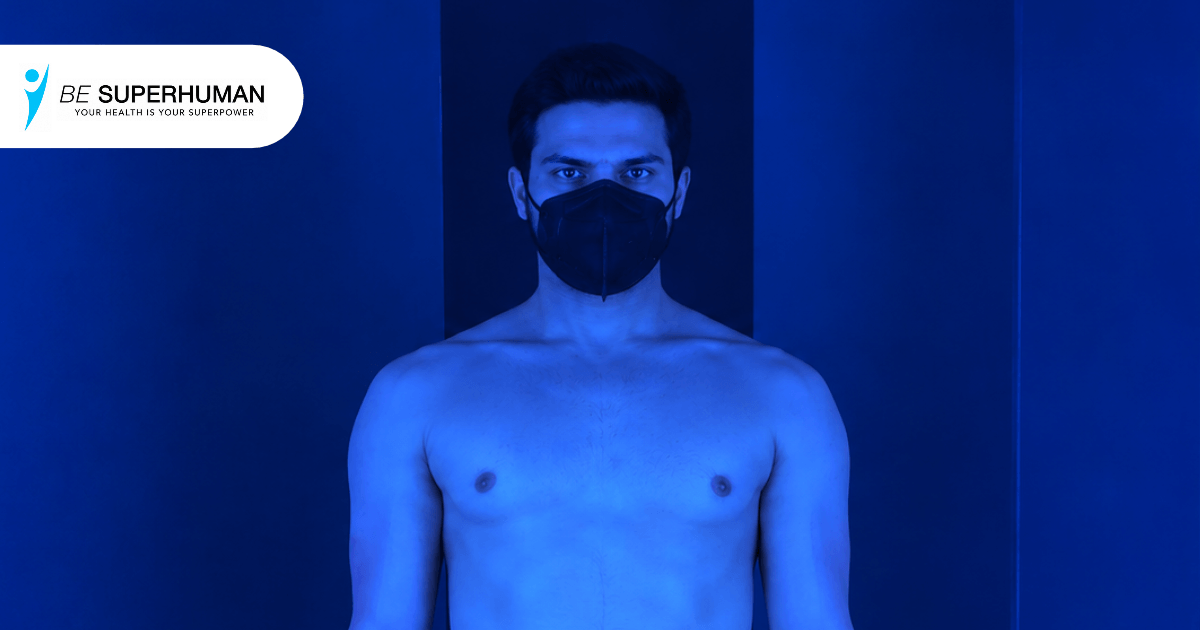
The brief cold exposure triggers a deliberate circulatory response, blood pulled towards your core and then rushing back out to your extremities once you step out. That rebound is an active push of fresh, oxygenated blood through tissue, rather than circulation left to its own gradual pace.
Red Light Therapy
Lying under red and near-infrared panels is about as passive-feeling as a treatment gets, you’re simply lying there. But at a cellular level, it’s thought to actively support mitochondrial energy production in the cells it reaches, which is a genuinely active process happening well beneath anything you can feel.
Hyperbaric Oxygen Therapy
Spending an hour breathing purified oxygen under increased pressure actively increases how much oxygen your blood can carry and deliver to tissue throughout your body, supporting recovery processes that would otherwise be working with a standard, unpressurised oxygen supply.
IV Nutritional Therapy
Replenishing hydration and key nutrients directly into your bloodstream is an active way to support recovery from the inside, rather than waiting for a tired digestive system to gradually restore what’s been depleted through training, travel or a demanding stretch at work.
So Which One Should You Actually Choose
It depends on where you are in your own recovery, and it’s worth being honest about that rather than assuming more intervention is always better.
In the first day after something genuinely intense, a degree of passive recovery, proper sleep, reduced activity, is still valuable, your body needs time as much as input right after serious exertion.
From there, active recovery tends to be more useful the further you get from that peak intensity, when your body’s ready to be nudged along rather than simply left alone.
For most people living an ordinary, demanding London week rather than training for competition, the honest answer is that passive recovery alone tends to be too slow to keep pace with the cumulative fatigue of commuting, desk work and general life admin.
A weekly or twice-weekly active recovery session, whichever of our therapies suits what you’re dealing with, tends to do more for how you actually feel day to day than simply hoping an evening on the sofa will catch you up.
The Bottom Line
Passive recovery isn’t wrong, it’s just slow, and it leaves your body’s recovery processes to work at whatever pace they’d manage unassisted.
Active recovery, whether that’s a cold chamber, compression boots, red light panels, a pressurised oxygen session or a nutrient drip, is about deliberately supporting those same processes rather than simply waiting on them.
Neither replaces proper sleep or sensible training load, but for most people, a bit of active recovery built into an ordinary week closes the gap between how tired you feel and how quickly your body can actually catch up.
If you’re not sure which approach suits where you are right now, that’s exactly the kind of thing worth talking through on your first visit.
Frequently Asked Questions
Passive recovery means resting with minimal movement and letting your body repair at its own pace. Active recovery means deliberately supporting that same repair process, either through low-intensity movement or a treatment that encourages circulation and recovery without demanding exertion.
Not always, immediately after something very intense, some passive rest is genuinely valuable. But for ongoing, everyday fatigue and muscle tension, active recovery tends to support your body’s processes more quickly than passive rest alone.
All five of our core therapies are built around active recovery principles, compression therapy, cryotherapy, red light therapy, hyperbaric oxygen therapy and IV nutritional therapy each deliberately support a circulatory, cellular or nutritional process rather than simply waiting for your body to handle it unaided.
It varies depending on intensity, but many people find the day after a hard session, once any very acute soreness has settled, is a good window for active recovery treatments like compression or cryotherapy.
Yes. Active recovery isn’t exclusively for athletes, commuting, desk work and general everyday fatigue place demands on your body too, and the same therapies that support exercise recovery are just as relevant for supporting recovery from an ordinary demanding week.
Talk To Therapists
Schedule a call to talk to out health optimisation therapists at BE SUPERHUMAN
Latest Posts
- All Posts
- Active Recovery
- Cellular Health
- Everyday Energy
- Health Optimisation
- London Wellness
- Recovery Tech