DOMS Explained - Why Muscles Hurt Days Later and How to Recover Faster
You push through a hard workout feeling fine, maybe even a little pleased with yourself, and then two days later you can barely manage the stairs.
If that pattern sounds familiar, you’ve experienced delayed onset muscle soreness, or DOMS – one of the most common and most misunderstood parts of exercising regularly.
Here’s what’s actually happening in your muscles, why the soreness appears when it does, and what genuinely helps you recover.
What is DOMS?
DOMS is the soreness and stiffness that typically develops and peaks 24 to 72 hours after exercise, particularly after a workout that’s new, unusually intense, or involves a lot of eccentric movement.
Eccentric movement occurs when a muscle is working while lengthening – for example, when you slowly lower a weight or run downhill.
DOMS is associated with small amounts of muscle-fibre damage and the body’s subsequent inflammatory and repair response. This is a normal part of how muscles adapt to training and become stronger over time.
In other words, while DOMS can be uncomfortable, it doesn’t necessarily mean something has gone wrong.
Why Does DOMS Appear Days Later?
This is what catches many people out.
The physical stress on the muscles happens during the workout, but the soreness doesn’t necessarily appear straight away. The body’s inflammatory and repair processes develop over the following hours and days, which is why you might leave the gym feeling completely fine only to wake up the next morning – or the morning after – struggling to sit down or climb the stairs.
DOMS also tends to be more pronounced when your body isn’t accustomed to the type or intensity of exercise you’re doing.
That’s why you’re more likely to experience significant soreness after :
Trying a new type of training
Returning to exercise after time off
Increasing your training intensity or volume significantly
Performing a lot of eccentric movements
Doing a workout that targets muscles you don’t normally train
Over time, your body generally becomes better adapted to familiar forms of exercise, making severe DOMS less common.
What Doesn’t Help as Much as People Think?
When you’re sore, it’s tempting to try anything that promises faster relief. But some popular recovery strategies don’t have as much impact as people assume.
Static Stretching
Static stretching before or after exercise is often recommended as a way to prevent DOMS. However, evidence that it reliably reduces post-exercise muscle soreness is weak.
Stretching may feel good and can temporarily make you feel less stiff, but it shouldn’t be relied upon as a way to prevent DOMS.
“Working Through” the Soreness
Gentle movement can make sore muscles feel looser temporarily, but simply doing more intense exercise isn’t a shortcut to repairing the underlying muscle damage.
Training hard on muscles that haven’t recovered can also affect performance and increase the risk of poor technique.
What Actually Helps With DOMS?
There isn’t one magic treatment that makes DOMS disappear. The most effective approach is usually a combination of sensible recovery habits and, where appropriate, targeted recovery treatments.
1. Support Circulation With Gentle Movement and Compression
Keeping the body moving can help reduce the feeling of stiffness that often accompanies DOMS.
Gentle walking, light cycling or other low-intensity activity can be useful, particularly when compared with remaining completely inactive.
Compression therapy is another option, using controlled pressure to support circulation through tired, sore muscles. It’s particularly popular after demanding lower-body sessions and long runs.
2. Consider Cold Exposure
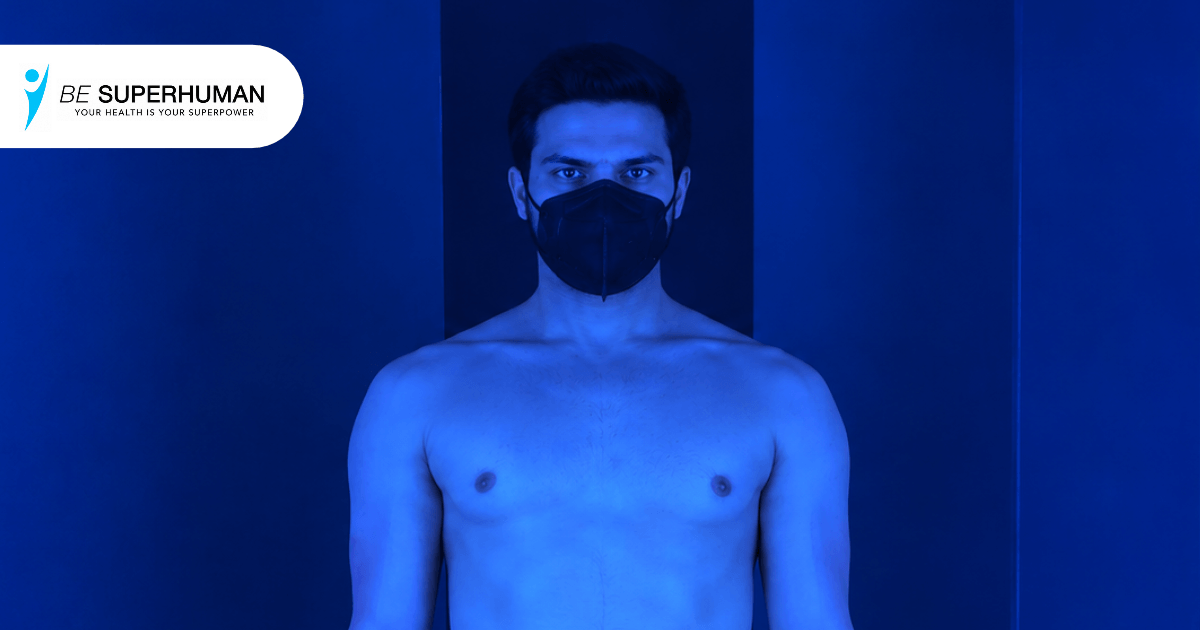
Cold exposure, including whole-body cryotherapy, is commonly used as part of exercise recovery.
The rapid changes in circulation associated with cold exposure may help manage some of the processes involved in exercise-induced muscle soreness.
It isn’t an instant cure, but some people find that it reduces the perceived intensity of soreness and helps them feel recovered sooner.
3. Support Cellular Recovery With Red Light Therapy
Red light therapy is another recovery approach that has attracted interest among athletes and regular exercisers.
The proposed mechanism involves supporting cellular energy production, which may be relevant to the energy demands involved in muscle repair and recovery.
For people who use both treatments, combining red light therapy with cryotherapy – cold first, followed by red light – can form part of a broader recovery routine.
4. Get the Recovery Fundamentals Right
Recovery treatments can be useful, but the basics still matter most.
- Protein : Adequate protein provides the amino acids your body needs to repair and maintain muscle tissue.
- Sleep : Quality sleep is essential for physical recovery and overall performance. Your body carries out many important repair and recovery processes while you sleep.
- Hydration : Staying adequately hydrated supports normal muscle function and overall recovery.
These fundamentals are arguably more important than any single recovery treatment.
When is DOMS Normal – and When Should You Be Concerned?
Typical DOMS can be uncomfortable, but it should gradually improve as your muscles recover.
However, pain that feels significantly different from your usual post-workout soreness deserves more attention.
Speak to a physiotherapist or GP if you experience symptoms such as:
Sharp or localised pain
Significant swelling
Pain that continues to worsen rather than improve
Symptoms concentrated in one specific area
Pain that feels more like an injury than general muscle soreness
Not every type of post-exercise pain is DOMS, so it’s important not to automatically assume that significant or unusual pain is simply part of training.
How to Build Recovery Into Your Training Routine
If you exercise regularly, DOMS is something you’re likely to encounter from time to time – particularly when you increase your workload or introduce a new type of training.
Rather than simply waiting for soreness to disappear, it can be useful to build recovery into your routine.
A consistent approach might include :
Appropriate training progression
Gentle movement after demanding sessions
Compression or other recovery treatments where appropriate
Adequate protein and nutrition
Good-quality sleep
Sufficient hydration
The goal isn’t to eliminate every sensation of soreness.
Instead, it’s to give your body the support it needs to recover effectively so that you’re not spending several days struggling through the aftermath of every tough workout.
The Bottom Line
DOMS is a normal response to unfamiliar or demanding exercise. It typically appears after the workout rather than during it, peaks within the following few days, and gradually resolves as your muscles recover.
While stretching and simply “working through” the soreness aren’t guaranteed solutions, gentle movement, compression, cold exposure, red light therapy and – most importantly – good sleep, nutrition and hydration can all form part of a sensible recovery strategy.
If you’re regularly experiencing significant soreness after training and want to build a recovery routine around it, our team is happy to talk through what could genuinely help.
Frequently Asked Questions
The muscle damage happens during exercise, but soreness builds gradually as your body’s inflammatory and repair response increases over the following day or two, which is why DOMS typically peaks between 24 and 72 hours afterwards.
The evidence for stretching preventing DOMS is weak. It may feel good in the moment, but it isn’t reliably shown to reduce the soreness that follows exercise.
Many people use whole body cryotherapy to support recovery from exercise-induced soreness, as the change in circulation during and after a session is thought to help manage the inflammatory response involved in DOMS.
DOMS typically peaks between 24 and 72 hours after exercise and generally resolves within a few days, though this varies depending on the intensity and unfamiliarity of the exercise involved.
Not necessarily. While DOMS reflects genuine muscle adaptation, its absence doesn’t mean a workout wasn’t effective, and its presence isn’t required for progress.
If soreness is sharp, highly localised to one point, involves significant swelling, or gets progressively worse rather than easing over several days, it’s worth getting checked by a physiotherapist or GP rather than assuming it’s ordinary DOMS.
Talk To Therapists
Schedule a call to talk to out health optimisation therapists at BE SUPERHUMAN
Latest Posts
- All Posts
- Active Recovery
- Cellular Health
- Everyday Energy
- Health Optimisation
- London Wellness
- Recovery Tech