Ultimate Guide to Red Light Therapy in London : How BE SUPERHUMAN Helps You
If there’s one question I get asked more than any other, it’s some version of “does this actually do anything, or is it just a nice fifteen minutes under a warm light.” Fair question. Between long hours in the office, the tube, and screens from the moment you wake up to the moment you don’t quite manage to put your phone down before bed, most of the Londoners walking through our doors aren’t chasing a miracle. They just want to know whether Red Light Therapy is worth the lunch break they’re giving up for it.
So this is my attempt at a proper, honest guide – what the treatment actually is, what it’s realistically doing to your body, and how a session at BE SUPERHUMAN actually goes, without the social media gloss.
What Red Light Therapy Actually Is
The proper term for it is photobiomodulation, which is a mouthful, so most of us just call it red light therapy or PBM. It’s a non-invasive treatment where bare skin is exposed to specific, low-level wavelengths of light – namely red light and near-infrared light. There’s no UV involved at any point, so it behaves nothing like sunlight or a tanning bed. It doesn’t damage skin cells, it doesn’t tan you, and there’s no burn risk.
Roughly speaking, red light sits around the 660nm mark and works mostly on the skin and the layers just beneath it. Near-infrared light, at around 850nm, goes deeper, reaching into muscle and joint tissue. Neither is visible in quite the same way – the red light glows, the near-infrared is largely invisible to the eye, but you’ll still feel a gentle warmth from it.
The Bit That Actually Matters : Cellular Energy
Here’s the simplified version, because the full biochemistry isn’t necessary to understand why this works. Your cells contain mitochondria – small structures that generate the energy your cells run on, in the form of a molecule called ATP. Mitochondria are able to absorb certain wavelengths of light, and when they do, it’s thought to support their capacity to produce that energy more efficiently.
I tend to describe it to clients as giving your cells a bit of quiet, undisturbed time to top up their own battery, rather than anything doing the repair work for them. Your body still does the actual work. The light just seems to give it slightly better conditions to do that work in.
Where It Actually Helps
We’re careful never to present this as a cure-all, because it isn’t one. What it does seem to offer is genuine support across a few specific areas, and it’s worth being clear about which wavelength does what.
Skin and Complexion
The red end of the spectrum is absorbed mostly by the outer layers of skin. It’s thought to support the activity of fibroblasts, which are the cells responsible for producing collagen, and regular sessions are associated with improved microcirculation – which in plain English tends to show up as a slightly brighter, more even complexion over time. Not an overnight transformation. More the kind of thing people notice a few weeks in, when someone asks if they’ve changed something about their skincare.
Muscle and Joint Ease
Near-infrared light goes further into the tissue, which is why it tends to be the one people reach for after exercise or a long week of physical strain. Whether that’s a weekend run around one of the parks or the fairly unglamorous strain of sitting hunched at a desk for nine hours, it’s designed to support the body’s natural process of easing everyday muscle tension and post-exercise soreness.
An Actual Wind-Down
This one gets overlooked, but it’s arguably the most relevant to London life specifically. Most of us spend our entire day under harsh blue light – phones, monitors, office lighting – which isn’t exactly what our nervous systems evolved to expect. Fifteen minutes under warm red light in the evening is thought to help signal a shift out of that alert, slightly wired state, supporting a more natural wind-down before bed. It’s a small thing, but for anyone who struggles to switch off after work, it’s a genuinely pleasant way to try.
Red Light Versus Near-Infrared, At a Glance
| Red Light (around 660nm) | Near-Infrared (around 850nm) | |
|---|---|---|
| How it looks | A bright, visible red glow | Barely visible to the eye |
| How deep it goes | Skin surface and just below | Deeper, into muscle and joints |
| Mainly used for | Complexion, collagen support, skin vitality | Recovery, joint comfort, muscle ease |
| How it feels | Gentle warmth | A slightly deeper, soothing heat |
Why a Clinic Session Beats a Home Device
Plenty of people ask why they’d bother coming in when handheld red light devices and face masks are everywhere online. Fair question, and home devices aren’t without merit for quick top-ups. But there are a few real differences worth knowing about.
A small handheld panel treats a few square inches at a time. Our full-body panels cover you head to toe in one go, which means you’re getting proper, calibrated exposure across your whole body rather than one patch at a time.
We also run both wavelengths simultaneously, so your skin and your deeper tissue are both being supported in the same fifteen minutes rather than needing separate sessions.
And, as with most things in this field, consistency tends to beat intensity – a shorter session done regularly will generally serve you better than an occasional long one.
What Actually Happens When You Come In
Nothing complicated, which is rather the appeal.
Before you go in, we’ll ask you to remove makeup, SPF or any heavy lotion from the areas you want treated, since some ingredients can scatter or block the light.
You’ll be given protective eyewear, which you keep on throughout, since the panels are more intense than anything you’d have at home.
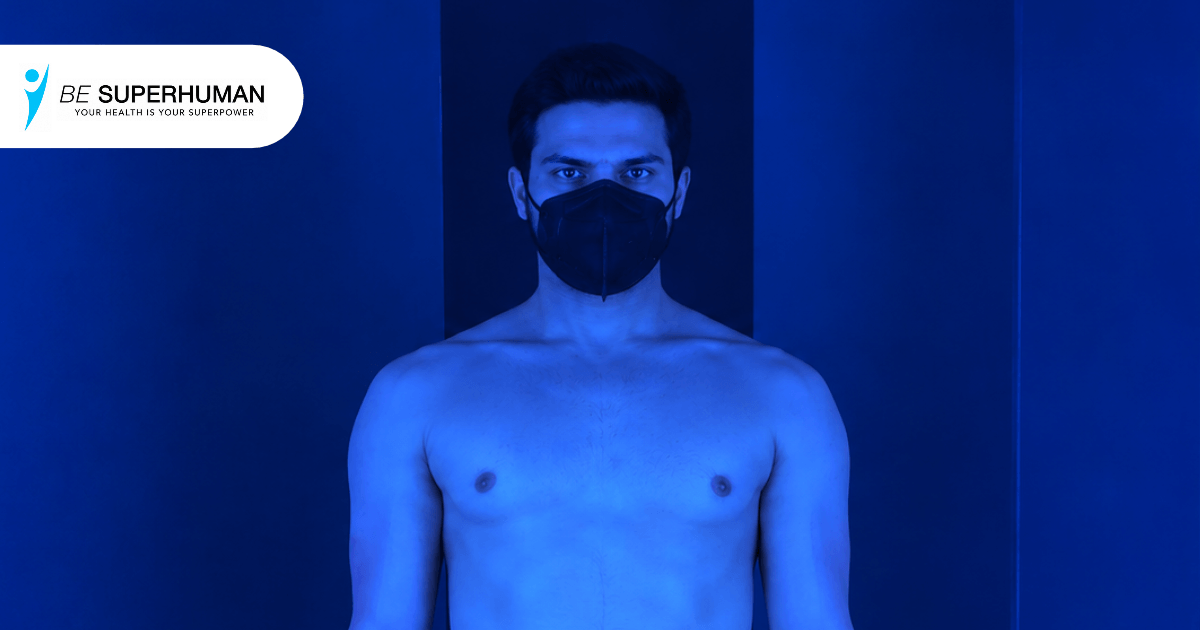
Then it’s fifteen minutes standing or relaxing in front of the panels, with as much clean skin exposed as you’re comfortable with. Most people describe it as similar to standing in warm sun, minus any of the UV concerns.
There’s no downtime afterwards. You get dressed and carry on with your day – genuinely one of the easier treatments to fit around a working schedule, whether that’s before a meeting or on the way home.
Pairing It With Other Therapies
One of the things I most often suggest to regulars is stacking red light with something else, since the two tend to complement each other rather well.
Cryotherapy followed by red light is a popular combination – the cold session first gets circulation moving and gives you that alert, invigorated feeling, and the warmth of red light afterwards helps bring your body temperature back and settles the nervous system down again. Similarly, combining hyperbaric oxygen therapy with red light gives a more thorough recovery session for anyone training hard or simply wanting a proper, unhurried reset.
A Few Practical Notes Before You Book
Drink some water beforehand, it genuinely helps with circulation during the session. Arrive with clean skin where you can, for the reasons above. And wear something you can get out of easily, since more exposed skin during your fifteen minutes means more of your body actually benefits from the light.
Final Thought
Red light therapy was never going to be the treatment that changes your life overnight, and I’d be doing you a disservice if I told you otherwise.
What it is, reliably, is a gentle, well-evidenced tool that works with your body’s own processes rather than against them – useful whether you’re after better skin, faster recovery, or simply fifteen honest minutes away from your phone in the middle of a busy week.
Come in and we’ll talk through what you’re actually trying to get out of it, and build a routine around that.
Frequently Asked Questions
There’s a reasonable body of evidence behind photobiomodulation supporting cellular energy production, skin appearance and muscle recovery, though results vary between individuals and it works best as part of a consistent routine rather than a single session.
A typical session at BE SUPERHUMAN takes around 15 minutes, making it one of the easier treatments to fit into a lunch break or a stop on the way home from work.
Yes, for most people. It doesn’t involve any UV light, so there’s no burn or tanning risk, and there’s no downtime afterwards. As with any treatment, it’s worth mentioning any skin conditions or medications to your practitioner beforehand.
Red light works mainly on the skin’s surface, supporting complexion and collagen activity, while near-infrared light penetrates deeper into muscle and joint tissue, making it more suited to recovery and easing physical tension.
Yes, and it’s a genuinely popular pairing. Cold therapy followed by red light is a common combination, as is pairing red light with hyperbaric oxygen therapy for a more thorough recovery session.
Talk To Therapists
Schedule a call to talk to out health optimisation therapists at BE SUPERHUMAN
Latest Posts
- All Posts
- Active Recovery
- Cellular Health
- Everyday Energy
- Health Optimisation
- London Wellness
- Recovery Tech