BE SUPERHUMAN : Health Optimisation Clinics in London
There’s a particular kind of tiredness that only London can produce. It’s not the honest tiredness of a hard workout or a late night out with friends.
It’s the tiredness of standing on a stationary Central Line train somewhere between Holborn and Chancery Lane, wondering why your legs ache when you haven’t actually walked anywhere, and realising you’ve had three coffees before eleven and somehow still feel like a phone at four per cent battery.
I bring this up because I think it’s the honest starting point for any conversation about health optimisation, rather than the usual glossy opener about “unlocking your potential.”
Most of us aren’t chasing peak human performance in some abstract sense. We’re just trying to get through a Tuesday without the 3pm slump, sleep properly despite a bedroom that never quite gets dark enough, and not feel like we’ve aged five years since finishing our last big project at work.
That’s really the gap that a place like BE SUPERHUMAN sits in. Not sci-fi biohacking. Not an extreme overhaul of your entire life.
More like a set of tools you can drop into an already packed week that genuinely help your body do what it’s trying to do anyway – recover, regulate, and keep functioning well under constant low-grade stress.
The London Problem, Properly Named
Let’s be specific about what’s actually going on, because “London is tiring” isn’t quite precise enough to be useful.
You’ve got long commutes that eat into both ends of the day. You’ve got grey winters that start around late October and don’t fully lift until April, which plays havoc with energy and mood in ways people don’t always connect to the weather.
You’ve got desk-bound jobs that leave legs stiff and circulation sluggish, even among people who consider themselves reasonably fit. And you’ve got a culture, particularly in the professional and creative industries, where being visibly exhausted is worn almost as a badge of commitment.
None of this is dramatic. That’s rather the point. It’s cumulative. Small deficits in sleep, movement, sunlight and recovery stack up quietly over months, and then one day you notice you’re not quite yourself and can’t pin down why.
Health optimisation, done properly, isn’t about reversing that in one dramatic session. It’s about giving your body better inputs, consistently, so it has half a chance of keeping up with the demands you’re placing on it.
What BE SUPERHUMAN Actually Does
BE SUPERHUMAN is a recovery and health optimisation clinic built around a fairly simple idea : your body already knows how to heal, regulate temperature, manage inflammation and produce energy.
It’s just that modern city life doesn’t always give it the conditions to do that well. The therapies on offer are designed to nudge those natural processes along, rather than replace them with something artificial.
Here’s the honest rundown of what’s actually there, and who each one tends to suit.
Whole Body Cryotherapy
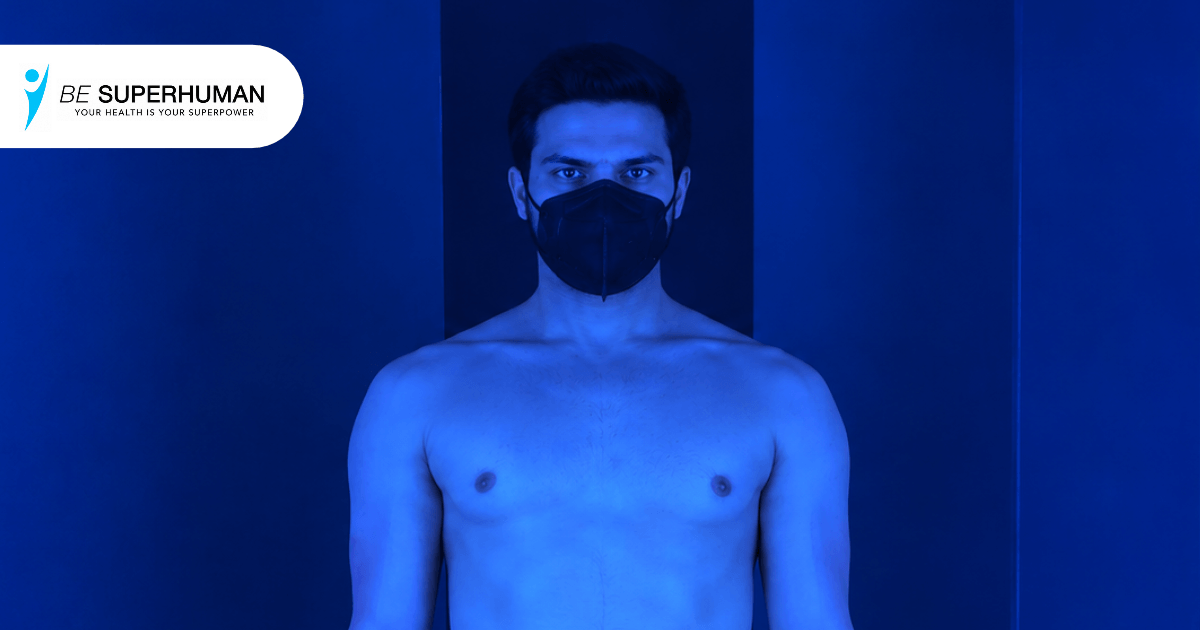
Whole Body Cryotherapy is the one people are most curious about and most nervous of, usually in equal measure.
You step into a cold chamber for somewhere between three and a half and six minutes – genuinely short, shorter than most people expect – while your body responds to the sudden temperature drop by pulling blood towards your core.
When you step back out, that blood rushes back to your extremities, and most people describe a warm, alert, slightly buzzing feeling that’s quite different from the low hum of caffeine.
It’s not going to fix a bad night’s sleep on its own, but as a way to reset before an afternoon of back-to-back meetings, or to take the edge off post-workout soreness, it’s oddly effective.
Your head stays outside the cold zone the whole time too, so the claustrophobia worry that puts a lot of first-timers off tends to be unfounded.
Local Cryotherapy
The same principle, but aimed at one area rather than your whole body through targeted Cryotherapy – a stiff shoulder from too many hours hunched over a laptop, or a knee that’s been complaining since your last half marathon.
Useful if you know exactly where the problem is and don’t need the full-body reset.
Cryotherapy Facial
Cryotherapy Facial is a gentler, cooling treatment across the face and neck. This one’s less about performance and more about circulation and that slightly puffy, under-slept look most of us are familiar with after a run of late nights.
No downtime, no discomfort, just a genuinely pleasant fifteen minutes.
Red Light Therapy
You lie under panels emitting specific wavelengths of red and near-infrared light for about fifteen to twenty minutes. The idea, in plain terms, is that this red light therapy interacts with your cells in a way that supports their normal energy production, which in turn is linked to things like skin appearance and muscle recovery.
It’s not going to give you a different face. What it does seem to do, based on how consistently people come back to it, is support the ordinary business of looking and feeling less depleted.
It’s also one of the easier habits to actually stick to, because it asks nothing of you beyond lying still and putting your phone away for a quarter of an hour, which on reflection might be worth the visit alone.
Hyperbaric Oxygen Therapy (HBOT)
This is the one that sounds the most futuristic and is, in practice, the most straightforwardly relaxing.
You sit or lie in a pressurised chamber breathing purified oxygen, which increases how much oxygen your blood can carry and deliver around your body.
BE SUPERHUMAN offers a few tiers of this, starting with a gentler soft silver tank pressurised to 1.3 ATA that’s a comfortable entry point for people who’ve never tried it, through to firmer hard-shell chambers for those wanting a stronger session.
Sessions run from around sixty minutes upwards, which sounds like a lot to carve out of a working week, but most regulars treat it as their one enforced hour of doing absolutely nothing – no phone allowed inside the chamber, which is either the best or worst part depending on how attached you are to your notifications.
Compression Therapy
If you’ve ever finished a day of back-to-back meetings, a long-haul flight, or a hard training session and felt like your legs have turned to lead, Compression Therapy is built for exactly that.
You sit in boots that apply sequential pneumatic pressure up your legs, mimicking the natural pumping action of muscles, which helps move fluid and reduce that heavy, swollen feeling.
You can work on a laptop or read while it happens, which for busy professionals is not a small selling point.
Where the Real Value Sits : Stacking and Consistency
Here’s something worth being honest about: no single one of these treatments is magic, and anyone telling you otherwise is overselling it. What tends to make a genuine difference is combining a couple of therapies and doing it regularly enough that your body starts to expect and use the input, rather than treating it as a one-off novelty.
A common pattern among people who visit consistently is pairing a cold cryotherapy session with something restorative afterwards, like compression or red light, effectively bookending a short but efficient recovery routine.
BE SUPERHUMAN’s own packages reflect this thinking – an entry-level combination bringing together cryotherapy, red light and compression in one sitting for people wanting an efficient everyday recovery stack, and a more comprehensive one that adds hyperbaric oxygen into the mix for a fuller reset.
The sessions themselves are also designed with real schedules in mind. Cryotherapy and red light sessions can genuinely be done in a lunch break. HBOT needs a proper hour, which makes it better suited to a slower Saturday morning or an evening when you’ve deliberately kept your diary clear.
The Marginal Gains Argument
I’m generally sceptical of anyone promising instant transformation, and if a clinic tells you one session will change your life, that’s usually the moment to be a bit more careful with your wallet. What’s more believable, and frankly more useful, is the idea of marginal gains – small, repeatable inputs that compound over weeks and months.
Better circulation this week doesn’t feel like much on its own. Better circulation every week for three months, alongside slightly improved recovery after workouts and slightly better sleep because your nervous system isn’t permanently in low-grade fight-or-flight mode, starts to add up to something you’d actually notice – more even energy through the day, fewer nagging aches, a bit more resilience the next time work gets genuinely stressful.
This is the frame health optimisation should sit in for most Londoners: not a radical reinvention, but a sensible, sustainable upgrade layered onto a life that’s already quite full.
A Realistic Way to Start
If you’re new to any of this, there’s no need to book everything on day one. A sensible starting point is a single weekly session of whichever therapy addresses your most obvious complaint – cryotherapy if you’re chasing an energy reset, compression if your legs are the issue, red light if it’s general fatigue and skin dullness bothering you, HBOT if you want a proper hour of enforced stillness. From there, most people naturally start stacking once they notice what actually helps them.
It’s also worth having a quick chat with the team on your first visit rather than treating it purely as a walk-in service. They’ll ask what you’re actually trying to solve, which matters, because someone training for a marathon and someone recovering from a run of late nights at work need quite different starting points even if the treatments overlap.
None of this requires you to overhaul your diet, quit coffee, or become the sort of person who talks about their sleep score at dinner parties. It just requires turning up, semi-regularly, and letting your body do what it’s already trying to do.
Frequently Asked Questions
A health optimisation clinic focuses on evidence-informed recovery therapies – things like cryotherapy, red light therapy and hyperbaric oxygen – aimed at supporting circulation, recovery and energy, rather than purely relaxation and pampering. There’s crossover with spa treatments, but the focus is more physiological than purely indulgent.
For most healthy adults, whole body cryotherapy is considered safe when carried out in a controlled clinical setting with a trained practitioner present, proper protective gear, and sessions kept to the recommended few minutes. As with any treatment involving extreme temperatures, it’s worth mentioning any underlying health conditions to the clinic beforehand.
Most people visiting for general wellbeing and everyday recovery start with once a week and adjust from there. Those training more intensely or targeting a specific issue often go two to three times a week, at least for a period, before settling into a lower maintenance frequency.
HBOT increases the amount of oxygen your blood can carry, which is understood to support the body’s natural repair and recovery processes. Many people report feeling calmer, clearer and less fatigued after regular sessions, though as with most recovery therapies, individual experience varies and it works best as part of a consistent routine rather than a one-off.
Talk To Therapists
Schedule a call to talk to out health optimisation therapists at BE SUPERHUMAN
Latest Posts
- All Posts
- Active Recovery
- Cellular Health
- Everyday Energy
- Health Optimisation
- London Wellness
- Recovery Tech