

November 3, 2026
“No pain, no gain” is one of the most repeated lines in fitness, and one of the most misleading.
A lot of people walk out of a session, feel nothing the next morning, and assume the workout did not count.
Others wake up barely able to sit down and take that as proof they trained hard enough.
Neither read is reliable, and leaning on soreness as a scoreboard can quietly steer training in the wrong direction.
The stiffness and tenderness that shows up twelve to twenty-four hours after exercise has a name: delayed onset muscle soreness, or DOMS.
It happens when muscle fibres experience microscopic damage, usually from movement patterns the body is not used to, particularly the lengthening (eccentric) phase of a movement, like lowering into a squat or controlling a weight on the way down.
That micro-damage triggers a local inflammatory response. Fluid and immune cells move into the area, nerve endings become more sensitive, and the result is the dull, tight soreness most people associate with “a good workout.”
The key detail: this process is a response to unfamiliar or unusually demanding load, not a direct measure of training effectiveness.
A new exercise, a longer session than usual, or extra time spent on the eccentric portion of a lift can all cause significant soreness even when the overall training stimulus was moderate.
Three patterns make this clear :
This is not a case for ignoring how the body feels entirely. Soreness is useful information, just not the kind most people think.
Soreness fading faster is not the same as progress slowing down, so there is no harm in using tools that make the in-between days more comfortable, as long as expectations stay realistic.
None of these tools are presented here as a cure for soreness or a way to bypass it entirely. They are support for a process the body is already doing on its own.
Instead of “how sore am I,” a more useful check-in after a session is : did the weight, reps, or pace move in the right direction compared to last time? Is sleep holding up? Is motivation to train still there?
Soreness will come and go largely on its own schedule, often with no clean relationship to how well training is actually going. Used as a rough, high-level signal, it is fine.
Used as the main measure of whether a session counted, it quietly encourages overtraining, or punishes consistent, well-adapted training for not hurting enough.
No. Soreness typically decreases as the body adapts to a given movement pattern, so a well-trained person can do an effective, hard session with little or no next-day soreness.
Standard delayed onset muscle soreness usually peaks between 24 and 72 hours after exercise and fades within a few days. Soreness lasting significantly longer, or worsening rather than improving, is worth monitoring and discussing with a GP or physiotherapist if it continues.
Not reliably. Studies comparing soreness to measured strength and muscle gains generally find no consistent link between the two, soreness reflects unfamiliar or unusually demanding load more than it reflects training effectiveness.
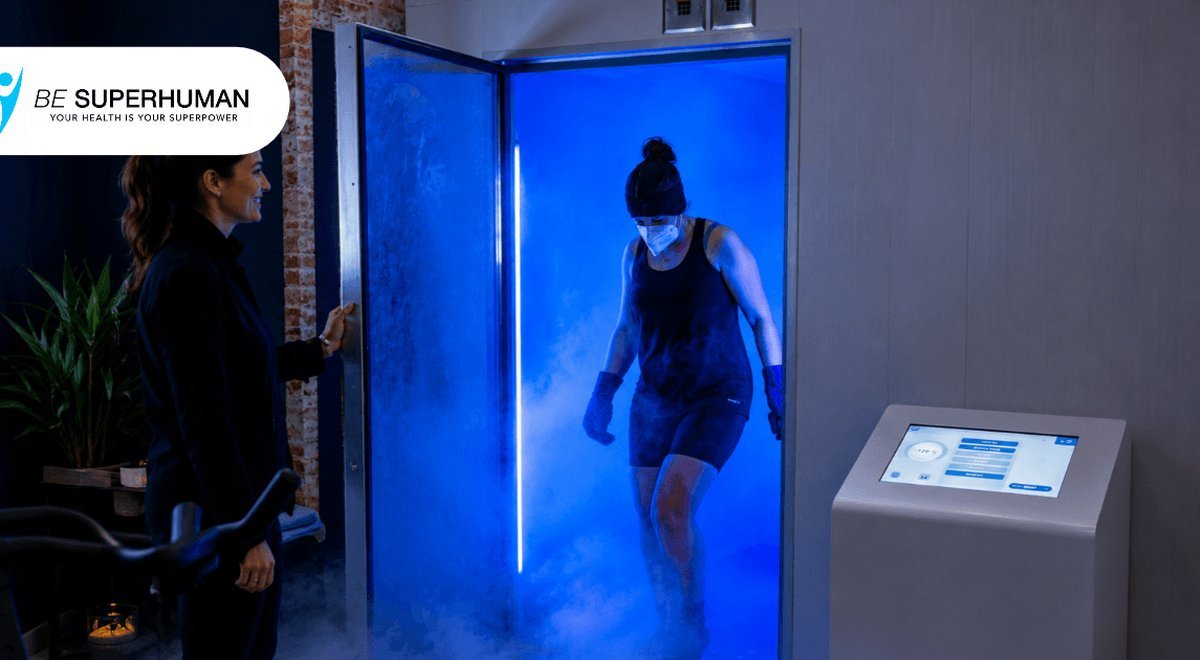
Light movement, adequate sleep, and sufficient protein intake are the most consistently supported basics. Many clients also use dynamic compression therapy, cryotherapy, or red light therapy as part of a broader recovery routine around harder training blocks.
It depends on the type and severity of soreness. Mild, general soreness is usually fine to train through, often at reduced intensity. Sharp or one-sided pain, or soreness paired with swelling or reduced range of motion, is a reasonable reason to rest and seek professional advice if it does not settle.
Schedule a call to talk to out health optimisation therapists at BE SUPERHUMAN
The choices you make today shape how you feel tomorrow. Experience personalised wellness therapies designed to support your body and mind.